Thursday, 14 March 2013

Women's History Month 2013 - Day 14

For you British blog followers, let me give you a little background information about a star not very far from here. In fact, in recent centuries it was discovered that out humble little planet actually revolves around it. To the rest of the world it provides heat and light. To us it’s that yellow disc-shaped phenomenon that is often seen for a couple of days in April and then September and usually prompts a selling-out of sausages in Sainsburys and a hosepipe ban.

Wry British weather-based humour aside, today I want to showcase a splendid dame who’s work in astronomy and astrophysics revealed some of the most important secrets of our universe, including what stars, including our own elusive sun is made of. The male astrophysicists of the day may have eclipsed this woman’s achievements and discoveries, but her contributions to the field are some of the most important in understanding how are universe works, so it really is time to give her some credit and give her a day in the sun.
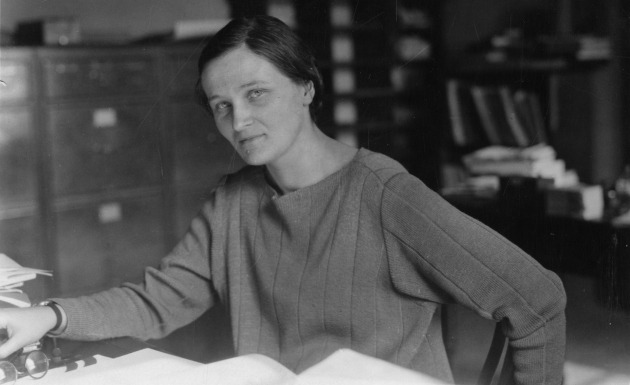
Cecilia Payne-Gaposchkin 

Cecilia Payne-Gaposchkin was born in Wendover, UK, in 1900. One of three children, her barrister father died when Cecilia was four leaving her mother to raise Cecilia and her two brothers alone. Unsurprisingly there was money to send her two brothers to college but not her, but Celilia, being so bright, won a scholarship to Cambridge, where she read botany, physics and chemistry, and sparked a life long passion in astronomy. Although she completed her studies, Cambridge did not award degrees to women – of course not – so her work went uncredited.

Realising the limitations of the British academic system for her gender, Cecilia headed to America. Harlow Shapley, the then director of Harvard College Observatory picked up on the talents of this bright young girl and encouraged Cecilia to write a doctoral dissertation. So in 1925 she became the first person to embark on a PhD in astronomy. Her thesis “Stellar Atmospheres, A Contribution to the Observational Study of High Temperature in the Reversing Layers of Stars” drew acclaim from her peers, and was quoted to be, by fellow astronomer Otto Struve “undoubtedly the most brilliant Ph.D thesis ever written in astronomy”.

It was at Harvard that she suggested that silicon, carbon, and other common metals seen in the sun were found in about the same relative amounts as on Earth, but helium and particularly hydrogen were vastly more abundant, concluding that hydrogen was the main constituent of stars. So with this star finding, how is it that you’ve never heard of her? She wasn’t fully credited with the discovery at the time because her male superiors convinced her to retract her findings on stellar hydrogen and publish a far less definitive statement, and Cecelia was worried about her academic career if she argued. Within a few years, however, she was proven to be correct. Not only was it shown that that all stars are essentially the same, her work also allowed astronomers to determine the temperature of any star from its spectrum.

Cecilia remained working in the scientific field for all of her life, spending her entire academic career at Harvard. Initially, she had no official position, merely serving as a technical assistant, with a meagre salary. Efforts were made to improve her position when she threatened to leave, and in 1938 she was given the title of "Astronomer". None of the courses she taught at Harvard were recorded in the catalogue until 1945. By the time she was awarded her PhD, she had published six papers on stellar atmospheres. By the time of her death she had published over 150 papers and monographs. To this day, women in science fight for the recognition of her name, and a call to have one of the major telescopes named after her.

Wednesday, 13 March 2013

Women's History Month 2013 - Day 13

Men are from Mars and women are from Venus. Or not. Or girls are made of sugar and spice and all things nice, while boys are made from slugs and snails and puppy dogs tails. Or not. Now most of us sensible, liberally minded sorts have agreed that gender and gender expression are nice and malleable, can change from the gender you were born into, or not, and can be expressed across the spectrum of male and femaleness and everything in between, and hoorah for that! The determination of the biological sex of a human, and other species is, however, a little more boringly black and white, due to the old XX and XY chromosomes, even if some people don’t let such details stand in their way of their true colours!

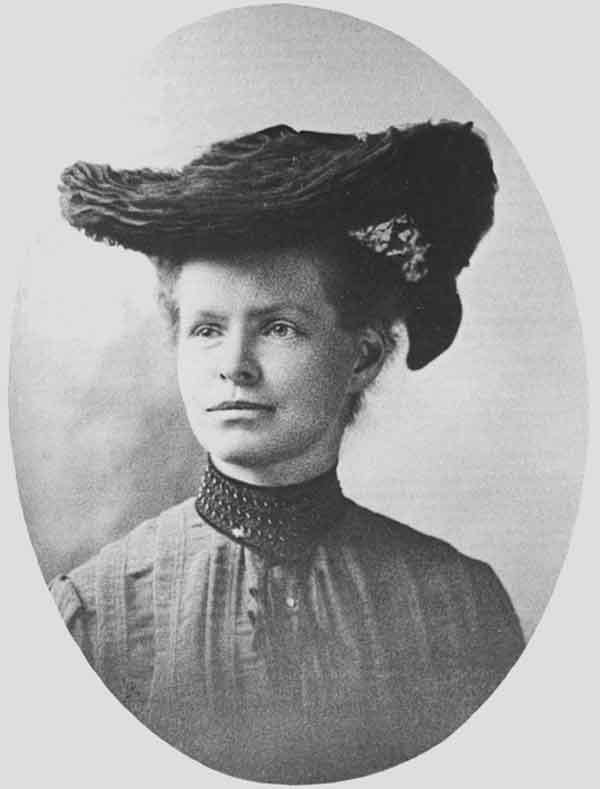
My hero du jour was one of the first biologists to notice this difference in the chromosomes; she was also a pioneer of women in her field and a somewhat controversial character, as posthumously it was difficult for her to hang on to her credits for the research work she did. Anyway, rocking her XX chromosomes like no other (and another spiffing hat), I give you...

Nettie Stevens (1861-1901)

Nettie Maria Stevens was born into a working-class Vermont family in 1861. Nettie, like so many of the women I’ve written about, was raised during a time when women's educational opportunities were limited to say the least. However, she was a promising student with a gift for science and mathematics, consistently scoring the highest in her classes. She attended college in Massachusetts, and spent the next ten years teaching, saving money from her wages so that she could fulfill her dreams of going to university, there certainly wasn’t any grants or student loans in those days!

In 1896, at the age of 35, Nettie attended Leland Stanford University, graduating with a masters’ in biology. After Stanford, she carried on her graduate work at Bryn Mawr College in Philadelphia. In 1903, Stevens was awarded her PhD, and was subsequently given an assistantship by the Carnegie Institute, after glowing recommendations from the president of Bryn Mawr.

During her research at Bryn Mawr and the Carnegie Institute Nettie discovered that in some species chromosomes are different among the sexes, mainly through her observations and research of insects (mainly mealworms). Investigating the mealworms, she found female cells contained 20 chromosomes, but male cells contained 19 large chromosomes and one very small one. She showed that the X body paired with a 20th, much smaller, chromosome in meiosis. She proposed that these two chromosomes be called X and Y, and explained that females contained two X chromosomes. The discovery was the first time that differences of chromosomes could be linked to an observable difference in physical. Nettie did experiments on a range of insects to determine this and prove her theories, and deduced the chromosomal basis of sex depended on the presence or absence of the Y chromosome.

As Nettie's scientific reputation grew, Bryn Mawr established a professorship for her, but alas she was not to take it. Nettie developed breast cancer and died in 1901, aged only 51. Following her death, her old head of department Thomas Hunt Morgan wrote an extensive, if somewhat dismissive, obituary for the journal Science, implying that she was more of a technician than a scientist, and some believe her position in the field of genetics has largely been ignored because the credit for the discovery of X and Y chromosomes is instead generally given to Morgan and his predecessor Edmund B. Wilson, who both received the Nobel prize for the discovery. But later manuscripts reveal that it was Nettie who discovered the two XXs. Although the history books may miss Nettie’s credit out, she is not to be forgotten, as without her attention to detail, the discovery may not have been made. She published more than 38 papers from 1901 to her death, in cytology and experimental physiology, and was one of the first American women to be recognized for her contribution to science. Proving that sometimes two Xs are better than one.

Tuesday, 12 March 2013

Women's History Month 2013 - Day 12

Although this is technically Women’s ‘History’ month, I’m sure our science sisters of bygone years won’t mind too much if I include some of my modern-day heroes in my little run down. As women in science and technology today are still less represented than men, are still pioneers and are still kicking butt in a ‘man’s world’ I think it is only fair to give them some space. Recent history has meant that they have still had to overcome sexism and misogyny to get where they are today. Whereas there are more women across the spectrum of science and technology in general, my own work and study tends to be on psychology and neuroscience so here are where my heroes lie. However I may be including some different current women soon, so watch this space.

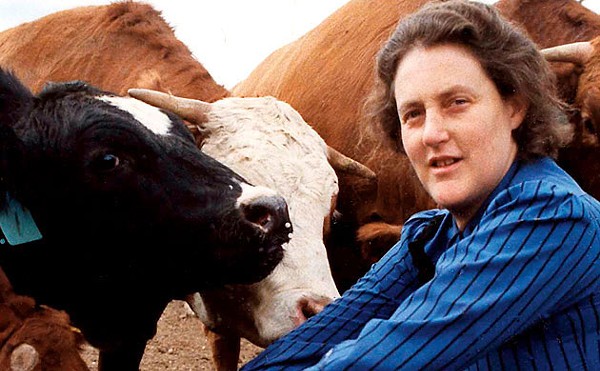
The first of these I want to add has been someone I’ve been interested in for a few years, ever since I saw a documentary about her on a C4 documentary (The Woman Who Thinks Like a Cow). I was happy therefore to find her mentioned in nearly every one of my textbooks when I was studying for my psychotherapy degree. Not only is she a woman with incredible achievement and insight, she also has a fascinating story, so much so that an abridged version hardly does her justice so please, please find out more about her if you don’t know her already. Hopefully you have heard the name, but if not I give you...

Dr Temple Grandin (Born 1947 )

You may have heard of Temple Grandin because of her work in innovation, especially in the farming and meat industry in America; or you may have heard of her because she is probably one of the most famous people living with autism in the world at this moment. I say living with rather than autism sufferer, as Temple has always promoted her autism as a unique characteristic rather than a handicap, and is an advocate for autism activism. She has done a lot to explain autism and how the autistic person thinks. In my favourite quote from her she says “What would happen if the autism gene was eliminated from the gene pool? You would have a bunch of people standing around in a cave, chatting and socializing and not getting anything done.”

Temple was born in 1947 in Boston. She didn’t speak until she was three and the doctors wrongly diagnosed her with brain damage. Just as women’s rights were poor in the 1950s, so were those of people with learning difficulties. The doctors advised her parents to put her in an institution. But Temple’s devoted mother was having none of it, and instead did everything she could to help Temple catch up. When her autism was diagnosed, little was known of the condition, and 'emotionally cold mothers' were usually blamed. Temple's mother knew she had been loving and supportive of her daughter so to hear blame from the doctors was devastating.

Although socially she found school, college and even university difficult, she developed ways of overcoming her anxieties. She is quite famous for her invention of the ‘squeeze box’ a device she made to calm herself down, which mimics a hug without human touch, something that many autistic children find uncomfortable. She was inspired to create it after seeing how a similar device calmed down cows on her aunt’s ranch when they were being inoculated. It was here that she also discovered her infinity with cattle, and her long, extraordinary career in livestock management and invention was sparked.

She went on to study livestock management. She was horrified at the way cows on ranches and feedlots were treated. Her empathy for animals motivated her to want to create a more humane system of care and slaughter. Because of her autism, she was able to visualize the process not only in far more detail than anyone else had, she was able to see it from the cattle’s perspective and understand why certain things went wrong in the process. The men she encountered in the industry mocked her observations, but Temple rose above it. Even when they vandalized her car, tried purposely to force her out of the field of study, and mocked her openly – based as much on her sex as her autism as farming was considered ‘a man’s job’, Temple pressed on.

After completing an MA and PhD in animal science, Temple went on to invent many new systems of cattle management and slaughter, wrote countless articles on the subject and lectures on animal welfare to this day. It is estimated that today over half the animals slaughtered in the US are done so through systems Temple designed. It may seem a ironic that someone who loves and cares for animals so much has helped designed systems for their slaughter, but Temple has said “I think using animals for food is an ethical thing to do, but we've got to do it right. We've got to give those animals a decent life and we've got to give them a painless death. We owe the animal respect... Nature is cruel but we don't have to be”

Temple has become a hero to many people, both in her autism activism work and in animal welfare and farming circles. In 2010 she was named as one of Time Magazine’s 100 most influential people in the world. Through her nine books and countless public lectures, Temple Grandin has made us think differently about autism... taking us on a journey inside the autistic mind, and teaching us that autism can be a gift – and that children with autism can go on to achieve amazing things.

Here is Temple talking about the role autism can have in the world:


Monday, 11 March 2013

Women's History Month 2013 - Day 11

Throughout history, folklore, fiction and mythology there have always been stories of women disguising themselves as boys and men to change their fortunes and challenge the status quo. Obviously this connotes the very real, practical implications that, until recently on the grand scheme of things, women had fewer opportunities to excel than boys, were not allowed to do many things and the only way to make it in a man’s world was to effectively ‘change gender’. Even the notion of a woman wearing trousers or going without a corset, was a shocking notion until the early part of last century!

A more modern eye, and one that reviews from a point in history where people are able to change gender and express their gender as they wish (even if it does not match up to the gender they were born into), could also attribute these stories to being about early transgendered men who changed their lives accordingly in the only way they could. With that in mind I am going to focus on a French botanist and explorer from the 18th and 19th Century who dressed as a man in order to become the first woman to circumnavigate the world.

Now I do not know, as my research has not turned anything up, if Jeanne (Jean) Baré was transgendered, or simply a women who realised that her sex at that time would hinder her ache for adventure and so dressed as a boy as a way to fulfill her dreams. Either way, hers is a story that should be told...

 
Jeanne Bare 1740-1807

Little is known of Jeanne Bare’s early life, except records tell us that she was born 1740, in the village of La Comelle in the Burgundy region of France; and interestingly her father was Jean Baret and her mother was called Jeanne. At this time this region of France was very rustic and poor and her family were probably labourers with little education. Jeanne presented herself as an orphan when she set out on her adventures, but this story was never confirmed. Neither was it confirmed how a girl with such humbled beginnings had educated herself so well.

Jeanne left her village and became a housekeeper to the naturalist Philbert Commerson. His wife died shortly after giving birth to a son, and it was thought that Jeanne took over the running of the house, as well as forming a less than domestic relationship with Commerson, which seemed to result in an illegitimate child (who was put up for adoption and died young).

Louis-Antoine, Comte de Bougainville, was a French Admiral and explorer. A contemporary of James Cook, he went on expeditions to settle the Falkland Islands and voyaged into the Pacific. In 1765, Commerson was invited to join Bougainville's expedition. His appointment allowed him one payroll servant – Jeanne was the obvious choice, but women were completely prohibited on French navy ships at this time. Jeanne had a cunning plan though...

No one noticed anything untoward for more than a month.

Jean Baré, was simply a 26-year-old valet, who had signed up to take part in one of the greatest voyages of exploration – Louis de Bougainville’s 1766 circumnavigation of the globe. Jean seemed to be an expert botanist and dedicated valet to his master. After a month at sea, some of the crew began to spread gossip and rumours about Jean and Philippe. Jean confronted the rumours head on. He told the ship’s surgeon that he slept in the same cabin on account of Commerson’s ill health, so he could help him better.

Jeanne’s voyage, however, was not going to be plain sailing. In March 1767, the ship landed at Tahiti, and Jean and Commerson was among the landing party, who were all eager to explore the island paradise. There was soon trouble though when the party happened upon some locals, who rushed to the beach and surrounded Jean and started touching him and shouting that he was a woman in disguise, they made it clear that they intended to rape her. The crew came to Jean’s rescue, but now there were serious questions to be answered – the ship’s surgeon asserted that Baré was indeed a woman in disguise.

Jeanne had to think fast. She first told Bougainville and his fellow officers that she was not a woman, but a eunuch, but Bougainville demanded further proof. To avoid further humiliation and degradation she eventually told the truth. Jeanne was now in fear of two things, punishment for her deception and sexual abuses from the crew. To protect herself from the latter she slept low down in the ships with two pistols to hand at all time. She did however escape punishment from Bougainville, perhaps because she and Commerson had found, and named, the spectacular flower Bougainvillea. Indeed, when the voyage landed back in France she actually she found herself celebrated as the first woman ever to circumnavigate the globe. ‘I admire her determination all the more,’ wrote Bougainville, ‘because she has always behaved with the most scrupulous correctness.’

Jeanne Baré lived a long life, enjoying the fame she attracted for her adventures, and after Commerson’s death, she married a blacksmith and settled back into provincial life. Regarded as ‘an extraordinary woman’, she was eventually given a substantial royal pension in celebration of her achievement.

Sunday, 10 March 2013

Women's History Month 2013 - Day 10

Today here in the UK it is Mothering Sunday, so firstly happy Mother’s Day!! One thing I have noticed in my research of great lady scientists and technologists is how few of them married or had children. It is perhaps a sign of the times that they lived in, or that we live in now, that to be a successful woman in science or academia used to mean forfeiting a family.

I have read how the ‘done thing’ was to give up work once one got married, and I suppose this was both a cultural sign of the times, and also a practical one. I can’t imagine the universities who were letting women in for the very first time, or the academic institutions that would not even pay women for their work, were going to provide childcare options as well! Neither do I expect there were many stay-at-home dads, work share schemes or laboratory crèches! I am far from saying that all women desire a family, and many women then and now would rather focus on their work than having children round their ankles, but it is interesting to note that more women in the field of science and technology in current times seem to at least have the option of doing both… and extra admiring love to them this Mother’s Day!

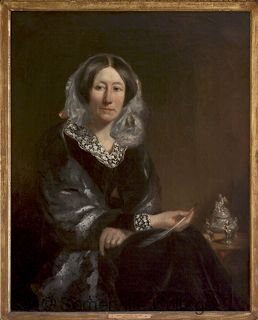
Anyway. After a bit of digging I have found someone who was both a mother of SIX and a science writer, astronomer and mathematician in a time where a women doing anything except playing the piano forte was considered inappropriate, so let’s give her a round of applause…


Mary Somerville 1780-1872

Mary (Fairfax) Somerville was the daughter of Sir William George Fairfax (an Irish vice-admiral); born in Scotland in 1780. Like so many of our other heroines she was a willful, ‘spirited’ girl, leading her own father to brand her a ‘savage’ and pack her off to an expensive boarding school, which is very much how things were done in those days (and occasional still, I know I was). Unsurprisingly she wasn't taught much other than the basics, but she had a thirst for knowledge and she was soon furthering her own education both with tutors and by her own initiative – she was evidently jealous of her brother’s tutelage, especially when she considered herself intellectually superior!

In 1804 she married her distant cousin, Captain Samuel Greig. They moved to London and Mary bore two sons. But it was not a happy time for her – although she could study more easily – surprise, surprise – her husband did not think much of women's capacity to pursue academic interests. Tragedy struck twice for Mary when she lost her husband and then one of their sons within a year. She returned home to Scotland upon their death in 1807.

Mary’s life was going to take a positive turn though. Grieg had left her enough money so that she could independently pursue her intellectual interests. Mary gained encouragement from leading intellectuals and scholars in Edinburgh, and advanced her studies of higher mathematics and physical astronomy. She read Isaac Newton's book Principia and began to submit solutions to problems posted in contests run by mathematics journals. In 1811, Somerville won a silver prize for solving a diaphiantine equations problem in Mathematical Repository.

Romantically Mary had some good fortune too, falling in love and marrying army doctor William Somerville in 1812. The couple had four children, three daughters and a son, though only two survived into adulthood. Unlike Grieg, William Somerville was completely supportive of his wife's intellectual interests. He was proud of her achievements and encouraged her to further study Greek, geology, botany, and mineralogy.

Four years after they were married, the family moved back to London, where William was elected to the Royal Society of Surgeons, and Mary established a name for herself in the British scientific society. In 1826, she published the results in "On the Magnetizing Power of the More Regrangible Solar Rays," in the Royal Society's Philsophical Transactions (Though her husband had to present the paper, because women were not permitted to attend meetings of the Royal Society – obviously!)

Mary’s reputation went from strength to strength and over the years translated complex books on astronomy and gravity into layspeak. The success of these publications prompted the Royal Astronomical Society, in 1833, to name her an honorary member. Mary’s next book was an even bigger success. The Connection of the Physical Sciences was first published in 1834, and summarised all that was known in the physical sciences, but also showed how different branches of science overlap in techniques and ideas.

When William became ill in 1838, the family relocated to Italy. Mary spent the rest of her life mainly on the continent—even after the death of her husband in 1860. Though family concerns were paramount, Mary continued her scientific work and spent most of the remainder of her life writing books on all aspects of science. She even ruffled religious feathers for arguing that the earth was older than stated in the Bible, based on geologic evidence.

Mary's last work of note was the two-volume On Molecular and Microscopic Science, published in 1869. She was awarded the Victoria Gold Medal at the Royal Geographic Society of London. Although she was a patron of the Society, she never achieved member status because of her gender.

Mary Somerville died at her home in Naples in1872. She was almost 92 years old and still working on a mathematics article at the time of her death. She was honored by Oxford through the naming of Somerville Hall, the creation of the Mary Somerville scholarship for women in math, and the establishment of Somerville College in 1879.

Saturday, 9 March 2013

Women's History Month 2013 - Day 9

In a 2010 study it was revealed that from a sample of 2,043 sample air passengers, 83 percent said they felt safer with a male pilot than a female pilot. Which is crazy considering how many of aviation's pioneers were actually women (not to mention WTF, WHY??). The history of aviation (as well as aeronautics) is littered with the stories of girls dreaming of taking to the skies and finding adventure. Beyond Amy Johnson and Amelia Earhart, Ruth Nichols and Jacqueline Cochran there are countless women to choose from to honor. The one I have chosen appealed to me because she was a real trailblazer and achieved so much in her short life. Her whole life seemed to be about breaking with convention and battling sexism in the industry. Her suicide at 37, seemingly in part caused by her frustrations at never quite getting to where she wanted to be in 'a man's world', touched me closely and made me want to share her tale.

Helen Richey (1909–1947)

Helen Richey was the first female to be hired as a commercial pilot in the US. She was born in McKeesport, Pennsylvania in 1909. She was an 'unconventional child' by the standards of those days, shunning dolls and girlish artifacts in favour of boyish pursuits, and even attempted to run away to join the circus when she was 12. During her teens, Richey was one of the few girls in her town to wear trousers. She learned how to fly a plane at age 20, and although her father was strict and had disapproved of her 'ways', he did buy her a plane when she obtained her pilot's license. That sure beats a pony!

A year later she earned her commercial pilot's license, then in 1933 she was contacted by fellow pilot Francis Marsalis about making an attempt at an endurance flying record. After taking off from a Miami airport the two women stayed aloft in a small monoplane for nine days and 22 hours! Soon after setting this record, Helen was hired by by Central Airlines. On December 31, 1934 making her the first female pilot to work as a pilot for a regularly scheduled commercial airline and the first female to fly the mail. However despite this milestone, Helen’s application to the pilot’s union was rejected because she was a woman. After ten months she resigned from Central Airlines.

In 1942 the US Woman’s Airforce Service Pilots (WASP) was organised and Richey was one of the first to sign up. She spent the next 16 months ferrying aircraft from American factories to air bases. The WASP organization was disbanded in December of 1944 and Helen Richey returned to McKeesport, PA.

After the war – and with the men returned – Helen was unable to find work, without being allowed to join unions, sexism thwarted her beloved career at every turn, despite her world records and war effort. On January 7, 1947 she was found on the bed in her New York apartment, dead from an apparent overdose of sleeping pills. The aviation industry honour her as a pioneer and inspiration to this day.

Friday, 8 March 2013

Women's History Month 2013 - Day 8 (happy International Woman's Day!!)

Firstly happy International Women’s Day!!! I’ve felt a real buzz in the air since I woke up, and I think it’s because this year more than ever people are acknowledging the day; perhaps because the memory of 1billion rising is so recent in our minds (if you’re unaware of 1billion rising and V-day have a read). So to commemorate I went to a film screening about reclaiming natural childbirth, where I was surrounded by lots of lovely pregnant hippy ladies (what could be more appropriate), and then went for tea and cake. Tonight I’m going to a Women’s Day event at The Stag and Hounds in Old Market… Happy Women’s Day indeed!!

I went to the film because since I became a hypnotherapist I have realised that one of the most important and influential opportunities in my work is to help women have a peaceful, empowered and natural pregnancy and birth. In terms of feminism I think it is vital, and I could (and almost certainly will) dedicate a whole blog article to it at some point. Anyway, I want to tie this into my Women’s month project. I wanted to cover a woman famous to midwifery and obstetrics, but surprisingly there aren’t many. This is possibly because childbirth used to be considered, quite rightly, a completely natural bodily process that required little intervention. Midwifes were no more than local good ‘wives’, healers, herbalists and ‘wise women’ who would assist at births because they held knowledge that had been passed down through the generations about the natural workings of a woman’s body….

Then the Christian dark ages happened, sigh, and a lot of these women were accused of being witches and executed, or they lived in fear of practicing their craft. Women were now expected to suffer for 'Eve’s sin', often confined into dark rooms for their internment. An air of fear and grimness hung around childbirth and, without the old ways, deaths and complications were common. This fear grew, and soon the doctors of the age tried to come up with the cures and remedies of this ‘affliction’ of childbirth… from the middle ages to the 1950s everything was tried, from torturous birthing instruments to knocking women out with chloroform! Most of these doctors over this period were, of course, men. Once birth had become something requiring medical intervention, women were moved into hospitals to give birth, which were, until a hundred years ago, pretty unsanitary places to go. Infant and women mortality remained high, as it wasn’t until the medical industry learned of the importance of hand washing, that infection and disease could be spread at a great rate.

Fortunately things are coming back full circle and since the 1970s a more natural approach to childbirth is being accepted again. More and more women want to get control back over their own bodies and labour just as their bodies know how. Unfortunately a lot of that fear and anxiety remains, but that is something that the likes of me and my other natural birth comrades are trying to deal with!

So with not much room left, I am going to just pay a short homage to one of the first women to recognise that, in birth, going backwards in time was the way to go forwards, and that natural birth was best.

Elisabeth Bing (Born 1917)

Elisabeth Bing is of German- Jewish decent. She was educated in the UK and then fled to America during the Nazi uprising, settling in New York. She co-founded the American Society for Psychoprophylaxis in Obstetrics (now Lamaze International) in 1960. Elisabeth was instrumental in bringing the Lamaze Method to the U.S. and a pioneer in educating parents for childbirth. Bing lived for many years at 164 West 79th St., and she operated a centre on the ground floor of the building, at which generations of Manhattanite parents prepared for the birth of their children under her tutelage. This grassroots organisation promoted a calmer, more mother-central approach to birth, with as little medical-management as possible; proving that medical intervention was not necessarily safer. She is quoted as saying “Physicians must learn to keep their hands in their pockets unless there are specific medical indications.” Her contribution to public health, pregnant women, safety of newborns, their partners and the family is monumental.

So this International Women's Day and Mother's Day on Sunday, give love and gratitude to the mums, mothers, midwifes, doctors and doulas who help us all all get into this world safely.