Monday, 4 March 2013

Women's History Month 2013 - Day 4


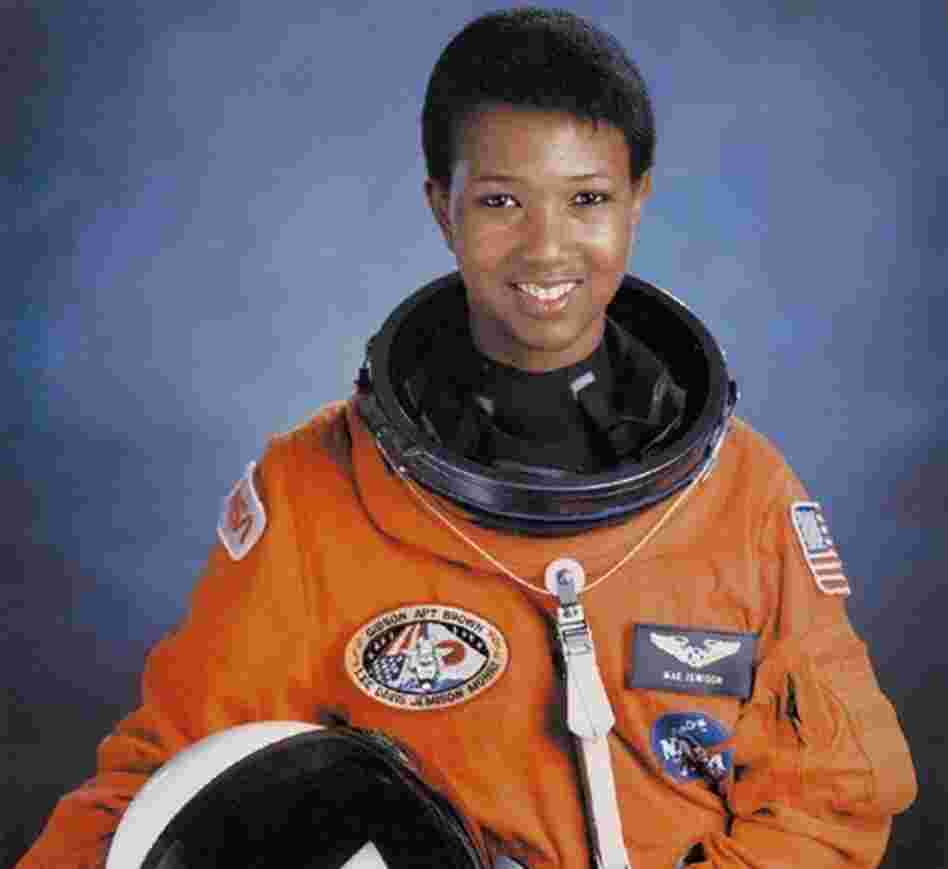
Today we have a celestial Goddess who reached for the stars and boldly went where no African American woman had gone before... (you’ll get that reference in a minute). Not only was this starry-eyed woman an astronaut, she’s a trained doctor, has worked for the Peace Corps, is an education advocate, can speak four languages fluently, is trained in dance and choreography and now works in technological research; in short, she’s a badass – SHE EVEN GUEST STARRED IN AN EPISODE OF STAR TREK!! Overcoming not only the institutionalised sexism of academia, but also racism, to reach the stellar heights of her profession, ladies and gentleman I give you...


Dr Mae Jemison (born 1956)


Mae Jemison was born in Alabama in 1956, then moved to Chicago with her family when she was three in order to get a better education, and it was here that an uncle introduced her to the world of science. Now many little kids dream of being an astronaut, buy Mae also had a passion for anthropology, archaeology, and astronomy that she pursued throughout her childhood. She enrolled at Stanford University at the age of 16, and in 1977 graduated with degrees in both chemical engineering and Afro-American studies. Jemison faced both racism and sexism at Stanford, particularly in the engineering department, a place that was the domain of privileged white men. She has described, looking back, occasions where professors would ignore her input while congratulating her male classmates for the exact same comments. This only made her more determined to succeed.

Mae went on to study medicine at Cornell University, getting her doctorate in 1981. During this time also travelled through Asia and Africa with the Peace Corps, working as a doctor and legislator, before settling in California to work as a GP. But soon she decided to set her sights higher (I promise I’ll finish with the puns soon).

In 1987, on her second try, she was selected by NASA to be one of the 15 out of 2,000 applicants for their training program, and in 1988 she became the first black female astronaut in NASA history. Dr. Mae Jemison finally went into space in 1992, as the science mission specialist on STS-47 Spacelab-J. STS-47 was a cooperative mission between the United States and Japan. The eight-day mission was accomplished in 127 orbits of the Earth, and included 44 Japanese and U.S. life science and materials processing experiments.

Once back on terra firma, Mae did not rest on her laurels. She has gone on to set up projects to develop technology to help the developing world, which has worked on projects including thermal energy generation for developing countries, and satellite communications for facilitating health care in West Africa; and a second project which runs international science camps for students in their teens, aimed at encouraging people to think globally about how technology can deal with global problems.

Not content with encouraging the next generation, she has also appeared ON The Next Generation (even I groaned). In 1993 she became the first real life astronaut to appear on the show. Her honours and awards are too countless to list, but needless to say she is still working hard, advocating science and technology (especially for young girls and ethnic minorities), working within her established foundations, teaching and doing many public appearances. She continues to be a role model and inspiration to others.

Sunday, 3 March 2013

Woman's History Month 2013 - Day 3

-->
I have a cold sore. These painful, ugly little blighters have popped up on my bottom lip since I was little and are a nuisance. However if I catch them in time I can cut the healing time in half, with lysine supplements and Zovirax. Zovirax has been a staple of my bathroom cabinet since I was a teenager. So I think it is very fitting today that my chosen women of science is the person responsible for discovering the therapeutic qualities of acyclovir, the active ingredient in Zovirax. I mean she also helped developed drugs to treat leukaemia, gout and the rejection of transplanted organs too, but today I’m very grateful for her saving my poor pout every winter...


She is another who had to fight the inequalities of academia and who triumphed over personal tragedy to make important strides in science, this time in the field of medical research, with a legacy that includes the thousands of lives touched by the drugs she and her associates developed over the 20th Century. 

Gertrude Belle Elion 1918 - 1999


Gertrude (Trudy) Belle Elion was born in New York City 1918, to Lithuanian immigrant dentist Robert and Bertha (Cohen) Elion. Trudy's intellect manifested itself at an early age; she was a voracious reader and an excellent student, graduating from Walton High School at age fifteen. It was the death of her beloved grandfather from stomach cancer that propelled this intellect towards the desire to find a cure for cancer, and she chose to study chemistry as “a logical first step in committing myself to fighting the disease.”


Despite being awarded a first-class degree in chemistry she found it difficult to find work as a woman chemist, and nobody was willing to fund her to do a PhD as they worried about having the influence of a women in the lab. So instead she worked many jobs including being a teacher and chemical plant worker and food analyst.


Tragedy struck again in 1940 when her fiancé died of a bacterial infection. This only fuelled her passion for medical research further. Finally in 1944 she landed a dream job (in part due to the “manpower” shortage of such work due to the Second World War) at the pharmaceutical company Burroughs Wellcome as a senior research chemist. Here she worked on developing chemotherapy drugs – substances that could interrupt metabolic processes in cancer cells without damaging normal body cells; immunosuppressive drugs for kidney transplants (azathioprine), treatments for gout, lupus, and severe rheumatoid arthritis, and the all important antiviral drug acyclovir used to treat those rotten cold sores. Her work even went on to start development of drugs to treat the AIDS virus.


In 1988 at the age of 70 Trudy was awarded – shared with her peer George H. Hitchings and British chemist Sir James Black the Nobel Prize for Physiology or Medicine “for their discoveries of important principles for drug treatment.” In addition to this she was awarded over twenty honorary doctoral degrees, countless medals and awards and after her retirement in 1983 served on the boards of the National Cancer Institute, the American Cancer Society, and the Multiple Sclerosis Society, to name but a few.... not bad for someone who wasn’t able to get funding for a PhD!

She died in her sleep, at her home in North Carolina in 1999. One of her legacies was a folder full of letters from people whose lives she had touched and whose lives she had helped save.

Saturday, 2 March 2013

Women's History Month 2013 - Day 2


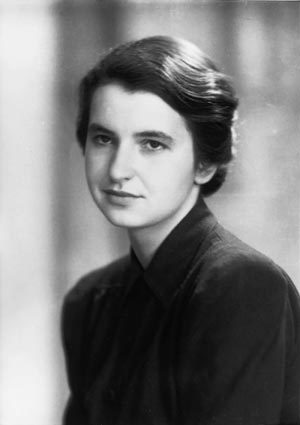
Today I bring you a British biophysicist that is integral to the spirals of science history, and to the very understanding we have of what makes us, us… Rosalind Franklin.


Rosalind Franklin 1920-1958

In 1962 James D. Watson, Francis Crick and Maurice Wilkins won the Nobel Prize for Physiology or Medicine, for their work regarding the discoveries of the properties and appearance of DNA. However their work could not have been completed without the input of a fourth person – Rosalind Franklin. As Rosalind passed away in 1958 and the Nobel Prize can only be awarded to a maximum of three people (and not posthumously), Franklin was left out of the history books, and indeed when Crick and Watson’s study was published, Franklin’s only credit was how their work was ‘stimulated by experimental results from Kings College researchers’ as a footnote. It wasn’t until 1968 when Watson published his personal account of the discovery of DNA – The Double Helix – that Franklin’s work was truly acknowledged – although he did try to bury this under claims that she couldn’t read her own data, and constantly referred to her as Rosy – a patronising name she never used or liked.

So who was Rosalind Franklin, and what was her role in this scientific breakthrough? Franklin was born in London in 1920. At the age of 15 she decided she wanted to become a scientist, but her first battle was with her father, who didn’t believe in the education of girls. Once she won that one, she found herself at Cambridge… Women were not entitled to full degrees at the time and upon passing her finals in 1941, Franklin received a titular degree. She remained at Cambridge where she worked towards a PhD in physical chemistry, which she received in 1945.

In January 1951, Franklin became a research associate at Kings College London in the Medical Research Council’s biophysics unit. She was a highly skilled x-ray crystallographer and was originally employed to work on x-ray diffraction of proteins. However, before she even reached Kings College, unit director John Randall reassigned Franklin to work on x-ray diffraction of DNA. After WWII ended, the race for who could discover the structure of the DNA truly began. In 1953, Watson and Crick proposed the idea that the DNA’s structure was a double helix. This discovery was based on an x-ray diffraction image that Franklin took. This included the infamous photo 51 – an x-ray diffraction image of DNA, which was critical in identifying its structure. This photograph ultimately proved what Watson and Crick were thinking – DNA was a helical structure – and they set about building their now famous model.

Rosalind Franklin died on 16 April 1958, aged only 37, of bronchopneumonia, secondary carcinomatosis and carcinoma of the ovary – possibly caused by exposure to x-ray radiation. She remained unaware of the legacy she left behind her and the Nobel Prize that she should have shared in. She has since received some credit for her work, but if you’re ever in a pub quiz and are asked to name the discoverers of DNA, spare a thought for Rosalind Franklin.

Friday, 1 March 2013

Woman’s History Month 2013 - Day 1


So today marks the first day of Woman’s History Month. The theme, so I’m told, is:

Women Inspiring Innovation Through Imagination:
Celebrating Women in Science, Technology, Engineering and Mathematics

Which I think is a pretty good theme, especially as this is one area of history that women are often conveniently left out of, or passed over for their male counterparts. Subsequently to honour this month – and also educate myself a bit more – each day of WHM I am going to honour one women from the annals of science, technology and mathematics history and give them a bit of a cyber pat on the back. There are a few women who did make it to the collective consciousness, so I am going to focus on the ones that didn’t... Marie Curie, Ada Lovelace and Florence Nightingale I salute you all, but please understand your lesser-known sisters need some airtime. I may write short biographies, I might write poems or short stories, depending on my inspiration, I’m going to try and mix it up.

If you can think of anyone you would like me to include over the next 31 days, please email or Tweet me. I will also endeavour to get my facts right (and stay off Wikipedia) but if I have got anything wrong and you can point me to a correct source instead then please let me know! So today I would like to start off with:

Amalie (Emmy) Noether (1882 – 1935)

Emmy Noether has often been referred to as the "most important mathematician you’ve never heard of:, and indeed Albert Einstein called her the most “significant” and “creative female mathematician of all time". She taught at the University of Göttingen, then Bryn Mawr College in the US. Her ground-breaking work in abstract algebra and theoretical physics led to concepts like "Noether's Theorem," "Noetherian rings," and "Noetherian induction."

Emmy was born in Germany in 1882 to a Jewish family, her father being a prominent mathematician at The University of Erlangen. Although originally she was going to train to be a teacher, Emmy enrolled to study maths here too; and after completing her dissertation worked at the Mathematical Institute of Erlangen, without pay, for seven years – because you know, obviously as a woman she couldn’t ACTUALLY be allowed to be on the academic staff.

This would be a theme of her early life, although working for The Circolo Matematico di Palermo, The German Mathematical Society and the Mathematical Institute in Göttingen, she still never secured a paying position. It was at this latter institution though, that she pursued important mathematical work that confirmed key parts of the general theory of relativity. Finally in 1919 she won the right to be a privatdozent – meaning that she would still work without a salary but could teach and charge students directly. In 1922, the University gave her a position as an adjunct professor with a small salary, but with no tenure or benefits. She was well-respected and liked by her students, and during this time worked on her 'ring theory' and ideas that became foundational in abstract algebra. Her work earned her enough recognition that she was invited to guest teach at The University of Moscow and in 1930 at the University of Frankfurt.

During the 1930s the Nazis purged the German universities of Jewish academics and so Emmy fled to America. The 'Emergency Committee to Aid Displaced German Scholars' obtained an offer of a professorship at Bryn Mawr College in America for Emmy, and they paid, with the Rockefeller Foundation, her first year's salary. The grant was renewed for two more years in 1934. This was the first time that Emmy was paid a full professor's salary and accepted as a full faculty member. What could have been a career chance that may have propelled her into the spotlight, alas her success was cut short and she tragically died a year later in 1935 during surgery to remove a tumour.

Her most famous legacy ‘Noether’s Theorum’ has been described by academics as ‘essential’, ‘beautiful’ and ‘integral’. I am not a mathematician so I am not going to attempt to explain it, however for all you maths geeks out there here is a link:

http://math.ucr.edu/home/baez/noether.html

Sunday, 13 January 2013

Transphobic feminists are an embarassment


So the embarrassing old aunties of feminism are bickering again. I almost don’t know where to start in my criticism of Julie Burchill’s Guardian article (Transsexuals should cut it out). It’s almost like having to write a rebuttal to granny’s views on immigration or explaining privilege to Grandpa. However as we both identify as feminists and I really want to distance myself from her views as much as possible, I feel I have to try.

I’m not naive. I know there is an ugly anti-trans vein running through feminism, and there always has been. Germaine Greer is famously transphobic, as were a lot of the 1970s radical feminists. But those were the dark ages in a lot of ways for many issues, ideas were in their infancy, things were new... but come on now, 40 years later and surely the world has moved on and has a better understanding of the psychology, physiology and sociology of trans issues?

So in what myriad ways is Ms Burchill so offensive? Well, her overarching hypocrisy as a feminist for a start. The ‘trans lobby’ have upset her feminist friends for standing up for themselves and being (quite rightly) appalled with Julie Bindel and Suzanne Moore’s frankly shocking use of language and stereotypes. Right. Obviously she has never, as a feminist, rebuked anything that has been offensive and misogynistic towards women? To me Julie Burchill’s notion of trans people ‘cutting it out’ (don’t even get me started on the offensive puns) is no different from admonished men the world over telling women to ‘calm down ladies’. Every sexist cliché about opinionated feminists have been re-written by Burchill against trans people. I say ‘trans people’ but Burchill only seems to take issue with trans women, making no acknowledgement of transgender men whatsoever, I don’t suppose she’s even given any thought or time to acknowledge the struggles they too face.

I also want to know why Julie wants to keep feminism as an elitist club that is only allowed to tackle certain issues affecting certain women? And also do we have THAT much support that we can turn people away for not having the correct chromosomes at birth? She champions her friends for all their feminist virtues: ‘anti-domestic violence activist Julie Bindel’ is sainted in the article. Now violence is something that I’m pretty sure trans women understand only too well, especially the threat and experience of bullying, harassment, violence, abuse and murder. Trans women are threatened by violence, domestic or otherwise, just as much as cis-women (Yes Julie, I am happy to use the term cis, get over it), and in some situations even more so. As Julie so crudely compared this fight to that of race through her vulgar black and white minstrel’s analogy, I will sink down to her level. Imagine if then Bindel was only focusing on violence against white women, and got upset when women of other ethnic backgrounds explained that they were victims of it too.

The rest of the article just seems pointless to examine as it is no more than Burchill trying to come up with and fit in as many crude names for trans women as she can think of, like some drunken white van-man with Tourette’s. She blathers on about her working-class origins (yawn) and after coming up with at least ten truly vile attacks on trans women, has the audacity to call trans people ‘bullies’.

So I just want to explain a few things to Bindel, Burchill and Moore. Firstly, Burchill says that other than this row she has no experience of ‘the trans lobby’ before this Twitter war. Here’s an idea, how about meeting and talking to a few trans women and men and listening to their experiences? Finding out what they’ve been through and what their stories are, she might actually learn something new and open up her mind a little. Secondly, she assumes that all trans women are anti-feminist and all cis-women (yup did it again) feminists are with her and are anti-trans. This is rubbish. I believe every group that are fighting a battle needs allies. I am proud to be a trans-ally as I and many other cis-gendered female feminists are. I would like to publicly distance myself from any corner of feminism that is transphobic. On the other side of this, many trans folk (men and women) are also feminists. I know of trans people who write feminist blogs, are activists and deeply care about feminist issues, even ones that don’t affect them directly, as well as the ones that do. And even if they didn’t and you continue to see them as forever different to cis women, are we doing so well in the fight against patriarchy that we don’t need more allies? Why on earth you would want to alienate a whole group of people who are fighting the feminist corner is bewildering.

I would like to think I have always been a trans ally. However this past couple of years it has been closer to my heart through watching my gorgeous niece transition. From a personal point of view this has had little impact on me other than swelling me with pride and awe as I’ve seen this amazing girl blossom and face all challenges with confidence and gusto, but I have also had days where I have had worries too, worries that she may face ignorance, bullying and discrimination. How sad to think that the worst of this actually comes from the poisoned pens of feminist writers, especially as my niece herself identifies as a feminist! As well as anger I feel truly sad for Julie Burchill that she has such a woeful lack of understanding. Her King Edward-sized shoulder chip blinds her to privilege and alienates her from a large community of fellow feminists; the trans community, and I would even say the LGBTQ community at large. She is stuck in the dark ages, and I for one hope that her vile article merely serves as the final nail in the coffin of this backwards-thinking school of feminist thought.

Wednesday, 14 November 2012

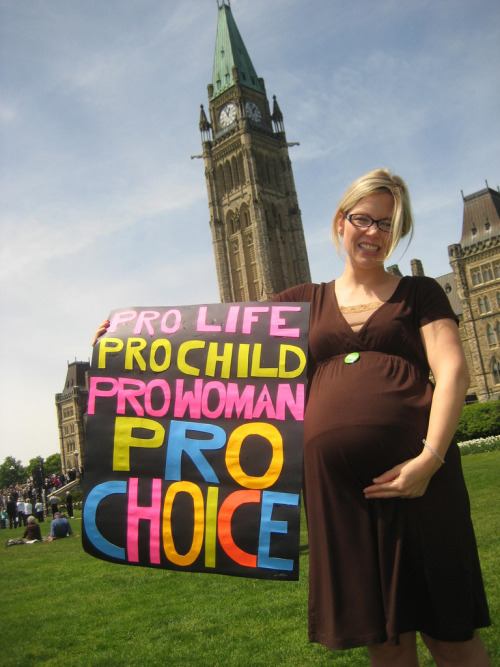
Pro-choice, not 'pro-abortion'...


Abortion. Even the word instantly gets people’s backs up. I’ve been dragged into a few debates about this of recent times, due to the American elections and our own dear politicians making it clear that it’s time to rake over existing policies again, and my head hurts. Beloved TV reality star Nadine Dorries (of previous Tory fame), explained one of her reasons for her bold move of destroying her political credibility by appearing on Britain’s answer to Tekeshi’s castle, was so she could promote her views on lowering the abortion cut off point. I personally find all Tory policies much more credible when they are delivered with a mouthful of wallaby scrotum, but that’s just me. Maybe Mitt Romney would have won the US election if he’d tried something similar. Now there’s a thought.


The debate about abortion is sensitive because opinions are personal, and sometimes have nothing to do with the profile of a person’s political, religious or ethical standpoint. And yet it is constantly a topic for political point scoring. Abortion should not be a political discussion, but a medical and social one. Yet it is used as a party-political weapon for the simple fact that the topic is so rousing. I have heard of cases where people use a politician’s standpoint on abortion as their main reason for voting, even when they politically lean the other way (both pro and against). That is insane!

Whenever I hear politicians debating abortion I always think of the episode of The Simpsons where the aliens Kang and Kodos take over the American presidential candidates’ bodies and are having a debate:

Kang: (as Bob Dole) Abortions for all!
(Crowd boos)
Kang: Very well, no abortions for anyone!
(Crowd boos again)
Kang: Hmm... abortions for some, miniature American flags for others!
(Crowd cheers and waves miniature flags.)

Pretty much sums it up.

Contrary to what is perceived, there is no hard-line profile of a 'pro-lifer' or 'pro-choicer'. Yes lefty-liberal feminists tend to be pro-choice, and right-wing religious types tend to lean the other way, but the issue runs much deeper than that. I’ve seen feminist blogs spawn tremendous debates, where hard-line feminists come out as Pro-life, I’ve also seen statements from Christians who believe in a right to choose. Not to mention the old adage of "you're only one unplanned teenage pregnant daughter away from being pro-choice". The fact that the subject has boiled down to two rigid points of view, which are then used as religious and political propaganda, is frankly insulting, unhelpful and detrimental to a grown-up discussion about the subject. Debates on cut-off point, emotional impact, funding, and the role of emergency contraception are all needed, but as it stands, cannot happen freely, as the pro-choice camp don’t want to be seen as being flaky or reactionary; and the Pro-lifers are scared that if they give an inch they’ll lose their battle. This reactionary squabble has prompted white male politicians into making incredulous statements about rape being God’s will and saving the unborn over the life of the mother. The subject has created a stalemate.

So why can’t we all discuss this sensibly? Because the subject is ‘icky’ and makes people really uncomfortable. By being pro-choice you are essentially fighting for a woman’s right to choose, however you find yourself basically fighting for abortion. You stop becoming pro-choice and you start becoming pro-abortion – you’re sticking up for it: ‘go abortion, woohoo!!’ Politically, when you fight for something you want or need, you have to become a champion for it: ‘free healthcare, woo!’ ‘Equal pay, fantastic!’ ‘The right to love and marry whoever you want! Yes please!’ ‘The right to terminate unwanted pregnancies through surgical procedure! Yeeeeh’... You see? It doesn’t sound good.

We pro-choice types believe a woman has a right to control over her body and her life, has a right to choose not to be a mother, to not have a child she can’t care for emotionally or financially, has a right not to carry her rapist or abuser’s baby and has a right to save her own life over that of her unborn child in the case of a medical emergency... what Pro-lifers hear is: 'We like killing babies! We love it. We want to go around with pitchforks and abort all babies. We don’t like cute little babies, we’re just plain evil like that.'

You may think I’m being dramatic but this is what it boils down to. I recently posted a story about a women’s right to choose on a forum and this is, verbatim (unfortunately) the reply I got from one woman:

Even with obama elected we still have hope in God that the unborn will get a vocie from the church!!!!! I am a Christian your wrong you are not a christain to which I am guessing no because you think it is ok to kill babies!!!!!! All I have to say is wow we all have our own opinions and if you cant respect that thence so be it but it is wrong your killing babies I don't think someone should have a choice to kill their baby and I strongly believe this and am willing to go down in a fight or anything I have to just so I can get my messenge out my God, my savior on high will work it out my hope is not in a man or president but in my savior Jesus! So I will leave it to you to do the right choose but that is what is right that's what I believe!!!!!!!!

Sigh. So you see, there it is. I personally go around, killing little babies with my bare hands because I am pro-choice. This seems ridiculous, but I actually had a bit of an out-of-body experience during this, frankly far-too long, debate with this woman – who actually hurt me more with her spelling and grammar than when she accused me of being a baby killer – and saw what she saw. To someone with a fundamental stance against abortion, anyone who is pro-choice is pro-abortion. And that is what I would like to clear up if we are going to carry on having these debates.

Pro-choice people don't like abortions. We would love to wake up in a world where they weren't necessary, a world where no woman would ever have to go through one again! Nothing would please us more. But until we wake up in a world free from sexual abuse, domestic violence, incest and rape that’s not going to happen. Until we wake up to a world where all women have free or cheap access to birth control and contraception services and adequate sex education that isn’t going to happen. Until we have a world where women have enough money to feed their children, have enough help and support to raise them and adequate health care for them then abortion is still necessary. Without legal, safe abortions women will die. Women may die from complications in childbirth, from botched backstreet or self-abortion, or from suicide.

This is also a world where actually, sometimes accidents and mistakes happen, and women should have the choice to not bring a child she doesn’t want or can care for into the world. Not to mention the instances where wanted pregnancies are terminated because a mother has learned that her baby’s quality of life is at risk if they are born. Mothers who love enough that they take that unimaginably hard decision should be praised and given the utmost care, not have scorn poured upon them.

Ironically, it seems that those pro-lifers who are politically right-wing and full of religious fervour, are those people who often want to deny women birth control; want to keep women poor and powerless, want to deny them free health care and not provide protection from them being abused. Ironically they cause more women to be in a position where abortion is the only way out. The old liberal feminists over here (hi) are trying to fight the system so that women are safe and empowered and cared for, resulting less of them finding themselves in a position where they need an abortion. It’s so ironic that Alanis Morisette should write a song about it.

I’m not going to further this with discussions about when life starts or foetuses being only potential life and ‘clumps of cells’ etc. I am not a doctor and staunch pro-lifers will only ever see foetuses as fully formed, flag waving, in-utero mini-citizens in knitted hats and booties. But I do say to them: if you want to stop abortions then stop preaching, and start promoting services and policy that will help women out of situations where they need them, and promote sex education and contraception. Fight against poverty and unaffordable health care, and understand that many women who have abortions do so out of love and compassion for existing life. Now that would REALLY be pro-life.

Friday, 5 October 2012


It's been a while...

My Dad passed away a couple of weeks ago, which has given me lots to think about but little time to write down my musings. Death is something I've had to deal with quite a bit of in my life, and while I get better at coping with the concept the older I get, it's something that provides endless thought and wondering about what life is all about...

I will no doubt go into more detail at a later date, but for the moment I want to share a poem I wrote after it happened and managed to read out at his funeral yesterday (getting over my fear of public speaking is something else that needs a further examination, but another time!)

I haven't written poetry for quite a while, but I'm hoping to write more in the future as I'd forgotten how cathartic it is... a bit like Tweeting, it's a good way of getting one's feelings down in a succinct way without being able to ramble. Anyway...


FOR DAD

We do not die.
Our vibrant spirit simply soars
to spread light,
to touch the new
connect to the old, and
become stars in the velvet night.

We do not die,
how can we?
when we live on each day
in thought, and memory.
Living a thousand new lives,
the hero of many tales
stored in the mind
like books read again, and again
by those left behind.

We do not die.
The codes have been written
into the spirals of every cell
of each new generation
seen in the faces of your children
known so well.

We do not die.
No.
We do not go!
Our finished bodies
become the earth
from which new flowers grow.

You did not die.
You have not really left us now.
We know the secret,
we know how
to keep you here in the hearts and minds
of everyone, the young and old
In every piece of sage advice
In every funny story told.

For now our hearts may break
And we may cry
But we shall not mourn for long
For you did not die.